
Why do shiny floors in underground garages and malls increase the risk of accidents?
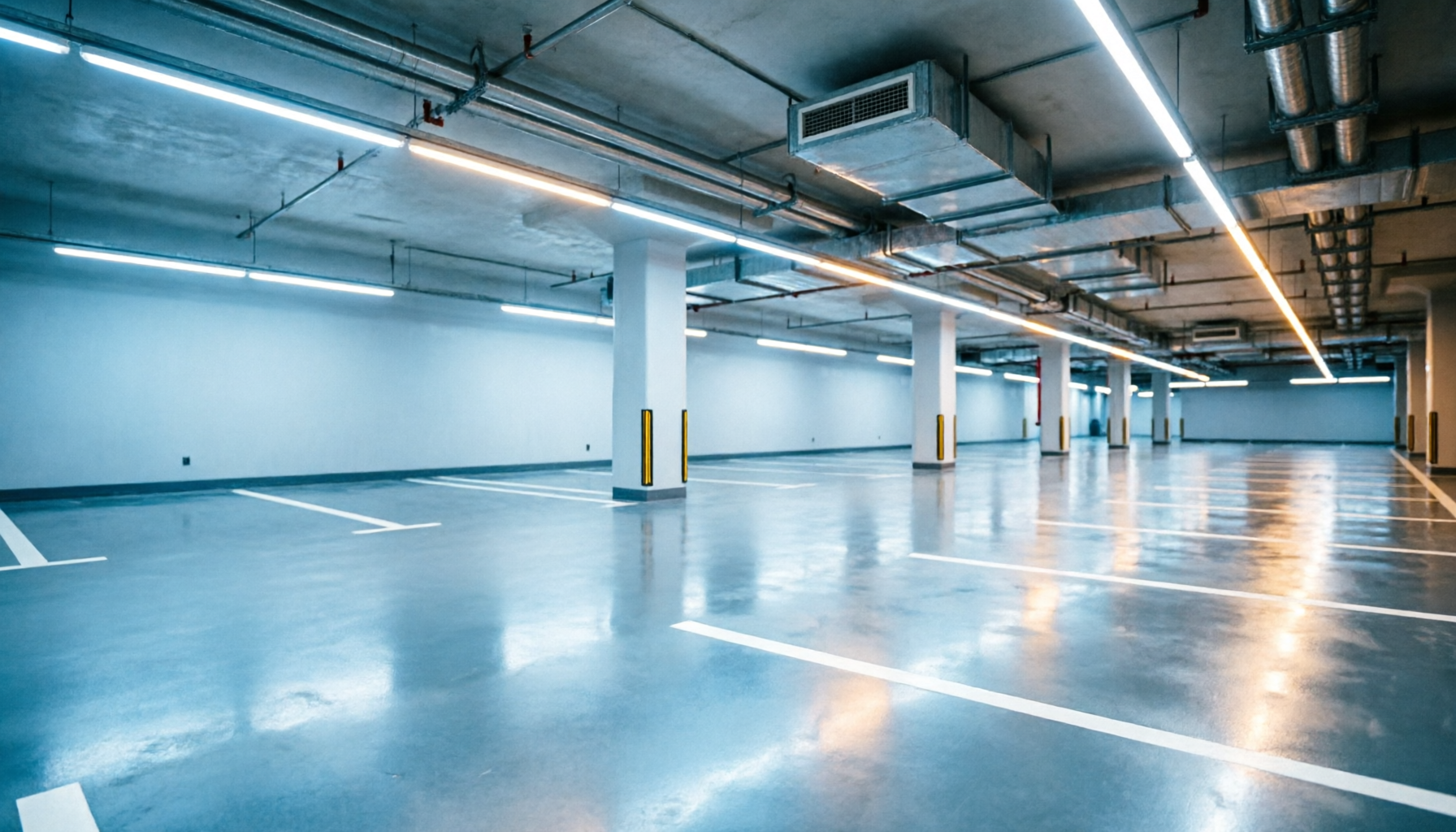
The shinier the floor, the more premium it looks—but rainy days become riskier. Do slip resistance and glossy finishes really conflict? From national standard data and underground garage pain points to transparent coating solutions, we explore how to achieve "glossy yet safe" commercial flooring.
<meta charset="UTF-8">
# The Brighter the Underground Parking Lot, the More Dangerous: The Slip Hazard of Glossy Floors
High-gloss epoxy flooring in underground garages looks bright and clean, but the shinier it is, the more hazardous it becomes on rainy days.
Why? Let's clarify three things.
First, glossy flooring acts like a mirror, not a slip-resistant surface. Property managers install glossy epoxy to reduce lighting costs. National standards require underground garages to maintain an illuminance of 5 lux; the high reflectivity of glossy floors paired with LED tubes allows for fewer fixtures and lower energy consumption. However, gloss implies a smooth surface, which means low friction. When rainwater is tracked in on tires during wet weather, the floor becomes slick as a mirror—vehicles lose traction upon entry and cannot stop in time. At Guangzhou Huachenghui Mall, newly installed epoxy flooring led to more than 10 collisions on a single peak rainy day, prompting media exposure.
Second, passing dry-state slip resistance tests does not guarantee safety in wet conditions. Many floor reports only measure the dry friction coefficient; a value of 0.50 is considered acceptable. However, accidents in garages rarely happen when it's dry—they occur when it's wet. Rainwater on tires, condensation at entrance ramps, or standing water left by floor cleaning machines all reduce the wet friction coefficient significantly. Relying solely on dry data is like driving without brakes in the rain.
Third, entrances, exits, and turning areas are high-risk zones. Frequent braking spots with inadequate anti-slip surfaces become accident hotspots in rainy weather. On slopes, the gravitational component due to the incline must also be considered—under the same friction coefficient, vehicles are more prone to slipping on slopes than on flat ground.
Choosing a garage floor? Ask these three questions first: What is the wet slip resistance coefficient? Is the entrance ramp treated separately for anti-slip performance? Is the glossy finish for aesthetics or energy savings?
The brighter it gets, the more dangerous it is. Not trying to scare you—we've actually fallen.